


LET'S UNLOCK WORDS AND PHRASES 🔐
refugee
/reh-fyoo-'jee/
The conflict has created thousands of refugees who are now seeking asylum in neighboring countries.
renunciation
/rih-nuhn-see-'ay-shuhn/
The leader’s renunciation of violence was welcomed by the international community.
Row
/roh/
There was a major row between the two nations over border control policies.
scar
/skahr/
The war left deep scars on the nation, both physically and emotionally.
security
/sih-'kyoo-ri-tee/
The government increased security measures to protect its citizens during the crisis.
shelling
/'shel-ing/
The relentless shelling of the city forced many residents to flee.
sniper
/'sny-per/
The soldiers had to be cautious as snipers were active in the area.
strategy
/'stra-tuh-jee/
The military developed a new strategy to defend the coastline from potential invaders.
collective
/kuh-'lek-tiv/
The collective effort of the allied nations was crucial in maintaining peace.
dominate
/'dom-ih-nayt/
The superpower aimed to dominate the region through military and economic influence.
equip
/ih-'kwip/
The troops were well-equipped with the latest technology.
expand
/iks-'pand/
The country sought to expand its influence in the region.
invade
/in-'vayd/
The army was prepared to invade the neighboring country if diplomatic talks failed.
load
/lohd/
The soldiers were busy loading supplies onto the transport trucks.
naval
/'nay-vuhl/
The naval forces were deployed to protect the shipping lanes.
proclaim
/PROV-ins/
The new government proclaimed the beginning of a new era of peace.
LET'S LISTEN! 🎧
Direction: Listen to the news and answer the comprehension questions below.

COMPREHENSION QUESTIONS
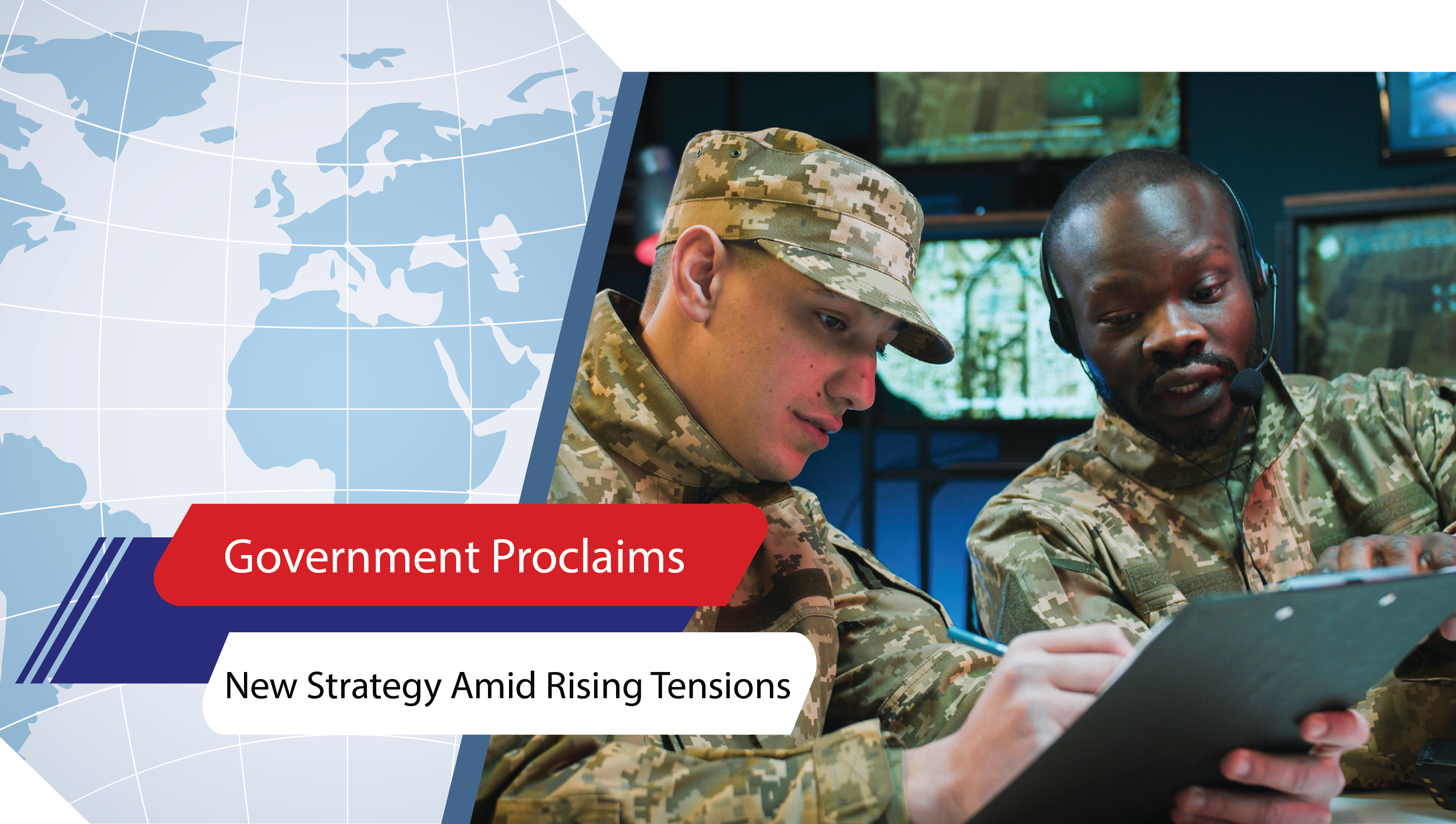
1.What new strategy did the government proclaim?
2. What caused the row among neighboring nations?
3.Why are thousands of refugees crossing the border?
4.What is the international community urging the involved parties to do?
LET'S PRACTICE 🎬
You are an international diplomat discussing with a government official the recent increase in tensions and the new military strategy. You need to address the refugee crisis, the impact of the row among neighboring countries, and potential strategies for ensuring security without escalating the conflict. Use the vocabulary from the lesson in your discussion.
TASKS
1. Discuss the government’s strategy for expanding and equipping the naval fleet.
2. Address the challenges posed by the refugee crisis and propose solutions.
3. Explore ways to manage the row between neighboring nations to avoid further shelling and violence.
4. Consider how the government can proclaim its intentions while working towards a peaceful resolution.
LET'S DISCUSS
- What are the challenges faced by refugees, and how can host countries best support them?
- How important is it for a nation to have a clear and effective strategy in times of conflict
- Can military expansion and equipping armed forces always be justified? Why or why not?
- What role does international diplomacy play in resolving rows and conflicts between nations